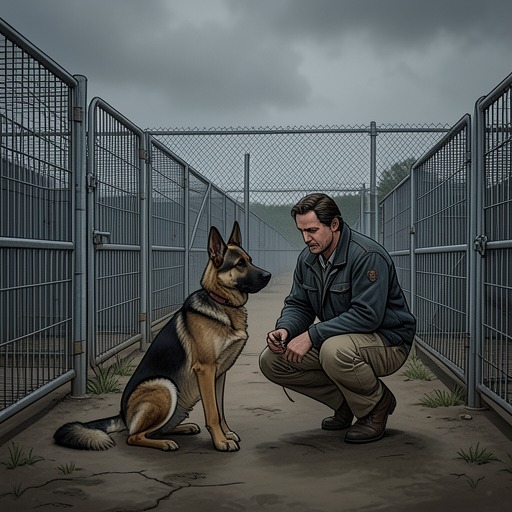
Wild dog group
World War ZFeral dog packs are the abandoned animal population reshaped by the Zombie War. Once pets and strays, they degenerated into killer groups that hunted for food across the same damaged landscapes occupied by refugees, soldiers, and the living dead. Their importance lies not only in the danger they posed, but in what they reveal about a world where human collapse has released other species from domestic dependence and made them independent forces in the war’s ecology.
Origins and Ecological Niche
Feral dogs emerged from the mass abandonment of domestic animals during the crisis. Their transformation was gradual but decisive: pets and strays became organized packs capable of surviving without human care and attacking whatever food remained. By the time military units encountered them regularly, they were no longer incidental nuisances. They were a recurring hazard in low-infestation zones, especially during movement through wild terrain, where a mission could be endangered by predators that had once lived beside people.
Their proliferation formed part of a broader ecological reversal. Human settlements had broken down, corpses became available as food, and animals that could escape the living dead, reproduce, and hunt gained an advantage. Feral dogs were more familiar to soldiers than some other predators, but familiarity did not make them harmless. They were dangerous precisely because they occupied the margins between household animal and wild carnivore, carrying the physical capability of dogs while losing the behavioral restraints imposed by human companionship.
Threat to Refugees and Military Operations
The danger of feral packs appears alongside the disorder of mass flight. On a Himalayan road, Sardar Khan remembered monkeys scrambling over vehicles and refugees as the living dead filled the streets, while thousands of people climbed around stalled traffic and fell from an unguarded mountain track. In such landscapes, every abandoned vehicle, crowded road, and improvised route became part of a larger contest for movement and survival. Feral dogs belonged to the same unstable environment: they were not simply enemies waiting at a fixed front, but mobile threats encountered while people crossed territory that no longer had reliable boundaries.
Darnell Hackworth explains that long-range missions over wild terrain were especially risky because of both the living dead and feral dogs. Early missions were often aborted before escort dogs were deployed. The packs could appear while units were moving through zones with relatively few infected, when soldiers might otherwise have lowered their guard. Their presence therefore changed military procedure: surviving a march required not only weapons and endurance, but specialized animals trained to protect the mission team.
The contrast with the living dead was important. Soldiers knew how to deal with dogs better than with unfamiliar predators, and dogs generally telegraphed their attacks. That predictability did not eliminate the threat, but it made feral packs a recognizable tactical problem. The soldiers’ language still reduced them to a hazard to be cleared or driven away, showing how wartime necessity converted a former domestic population into another category of hostile terrain.
Countermeasures and Escort Dogs
Military working dogs were first used for triage, sniffing out infected people through methods modeled on Israeli practice. Dogs were kept in cages because they might attack the person being tested, another dog, or their own handler. Early in the war, many dogs went berserk; handlers lost hands, arms, and throats. Their involuntary terror response was nevertheless useful, since the same instinct that made them volatile also helped identify danger and, in Hackworth’s account, probably saved millions of lives.
The escort program extended this principle beyond detection. Trainers sought to incorporate the dogs’ fear response into regular discipline rather than merely exploit it. The process began with young animals, including pups born after the crisis, and tested whether they panicked before a controlled encounter or held their ground. The successful dogs could be trained for group work and long-range missions, becoming protective partners rather than uncontrolled weapons.
Maze, the small dog Hackworth refers to, operated with two escorts, Pongo, a pit-rot mix, and Perdy, a much larger mixed-breed animal. Together they proved highly effective against feral packs: they drove packs away fourteen times and engaged them directly twice. In one encounter, Hackworth watched Perdy seize a two-hundred-pound mastiff by the skull, the crack audible through the harness’s surveillance microphone. The escorts also ensured that Maze stayed with her objective, waited for her, and brought her safely home; they even killed several living dead encountered in transit.
Combat Behavior and Limits
The dogs had to be trained never to bite infected flesh. A bite could be fatal, and soldiers could identify dead dogs that had succumbed without visible wounds because they had attacked infected bodies. Their combat methods therefore depended on controlled defense rather than indiscriminate aggression. Larger living dead could exploit a dog’s lack of balance by striking between the shoulder blades or at the small of the back, knocking it forward. Smaller dogs could trip an attacker, attack the legs, or launch themselves at the knee, and Maze favored dropping enemies onto their backs.
This training distinguished military escort dogs from feral packs. Both were shaped by the same altered world, but one population was selected, disciplined, and integrated into coordinated human operations, while the other developed through abandonment and survival pressure. The distinction was never absolute: the military had to teach its dogs how not to surrender to the same violent impulses that made feral animals formidable. Domestication thus reappeared not as a return to peace, but as a battlefield technology.
Relation to Other Feral Predators
Feral dogs were part of a larger resurgence of predators. Hackworth considers feral packs frightening, but distinguishes dogs from F-lions, wild large cats described as enormous, saber-toothed descendants or hybrids of mountain lions and escaped domestic cats. He argues that dogs usually telegraphed their attacks, whereas F-lions were more terrifying because their size, claws, teeth, and appetite for warm blood made them harder to anticipate. Rats had become a new ecological equivalent of cattle, surviving among corpses, trees, and ruins; predators capable of hunting them had to become even more formidable.
This comparison places feral dog packs within a food web created by catastrophe. They were not supernatural extensions of the living dead, nor merely symbols of human cruelty. They were animals responding to new sources of food, new absences of control, and new pressures on movement. Their behavior forced humans to recognize that the war had altered the ecology around them, not simply the human political order.
Narrative and Thematic Significance
The packs complicate the idea that the war was fought only between humans and the living dead. Animals became detectors, escorts, predators, casualties, and independent survivors. Military dogs received retirement care at Hackworth’s farm, the last remaining facility for the army’s four-legged veterans, while feral dogs remained a threat to soldiers crossing the countryside. The same species could therefore appear as a partner shaped by painstaking training or as a hostile collective created by neglect.
Their story also exposes the limits of human exceptionalism. Human institutions tried to classify, contain, rehabilitate, or kill the altered populations around them, yet those institutions could not prevent ecological change. In contrast with the whales, whose populations were devastated when hungry refugees and navies turned to industrial fishing and torpedoes, feral dogs represent a species that expanded into the spaces opened by human disaster. The result is morally ambiguous: some animals were protected and honored for service, others were hunted as threats, and both outcomes arose from the same collapse of the old world.
Feral dog packs consequently stand for the war’s enduring afterlife. Even when human forces regain territory, they must contend with the creatures produced by displacement, abandonment, and adaptation. The conflict does not end when the living dead are defeated; it continues in the transformed relationships among people, trained animals, wild packs, and the damaged environments they share.